UX/UI Design


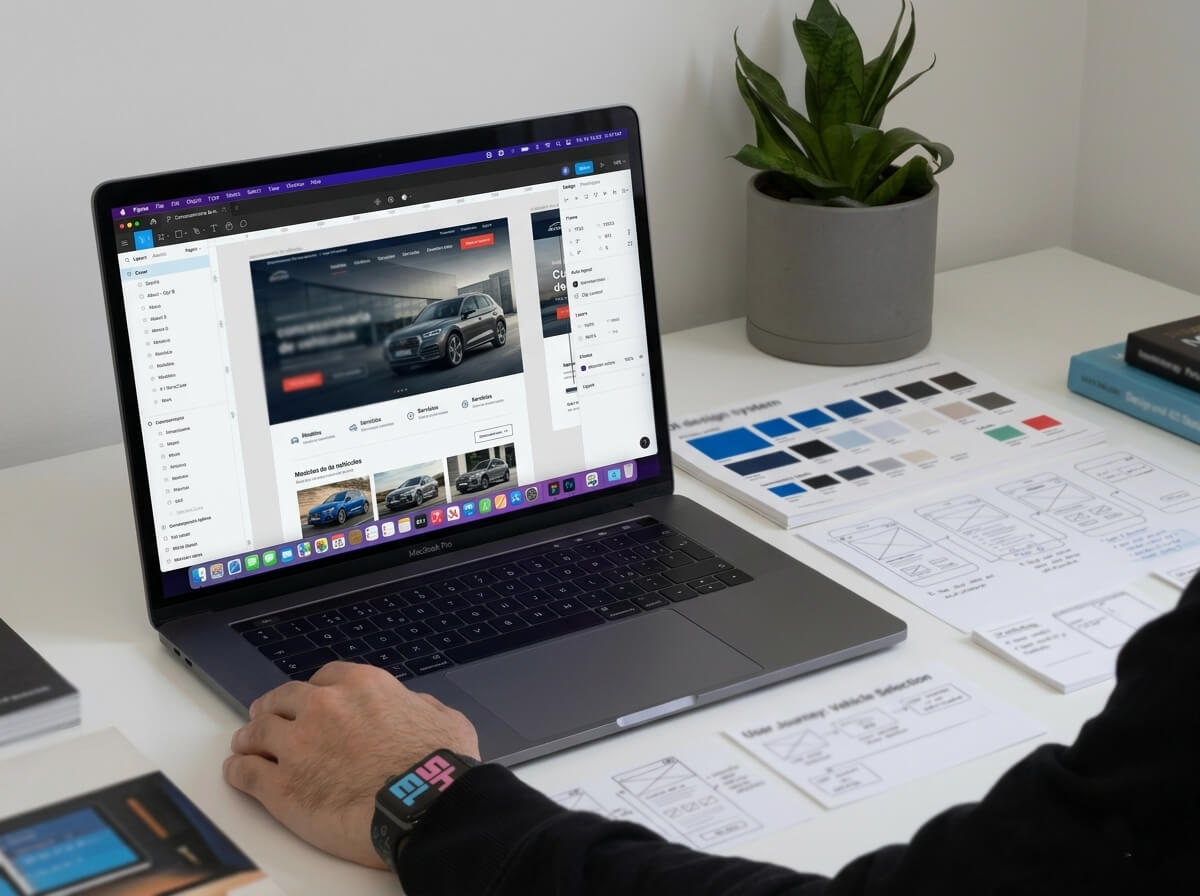
In the era of templates, flashy animations, and instant website builders, it’s easy to forget what web design is really about: solving problems. A well-designed website isn’t just beautiful — it’s effective. It guides, informs, builds trust, and leads users to act.
At Elemental Haus, we approach design as a functional tool. One that’s deeply rooted in clarity, usability, and business outcomes. Because in the end, a sleek UI is meaningless if users get lost, confused, or leave without converting.
This post explores what makes web design truly work — beyond aesthetics — and how we apply these principles in every project we take on.
Design Is Not Decoration
There’s a big difference between making something look good and making it work well. Good design is about solving a need: How do we get users to trust us? How do we make them take action? How do we help them find what they need in under 10 seconds?
To us, the best design:
Makes the user feel guided, not overwhelmed
Communicates purpose, not noise
Is invisible in its clarity — nothing unnecessary, nothing confusing
When users land on a site, they scan. They don’t read everything. They’re looking for signs of credibility, ease, and relevance. That means your job isn’t to wow them with animations — it’s to help them find what they need as fast as possible.
Principles of Functional Design
Here’s how we approach every website at Elemental Haus:
Clarity First: We prioritize content hierarchy and message clarity. Users should know what you do within 3–5 seconds.
Conversion Paths: Every design element should guide the user toward the next logical step — whether it’s booking a call, subscribing, or making a purchase.
Visual Balance: Design should feel intentional. Good use of spacing, typography, and contrast makes your site more readable and easier to navigate.
Responsiveness: We design mobile-first, then optimize for tablet and desktop — not the other way around.
Speed & Performance: A gorgeous site that loads in 5 seconds is a failure. We use tools like Framer and Webflow to build fast, performant sites that look sharp everywhere.
Common Design Mistakes (and How to Avoid Them)
We’ve worked with dozens of clients who came to us after trying to build their site internally or with other agencies. Here are some mistakes we often fix:
Overdesign: Too many fonts, colors, or elements fighting for attention.
No clear CTA: “Nice website, but… what do you want me to do here?”
Poor content structure: Walls of text, no visual hierarchy, confusing menus.
Neglected mobile UX: Buttons too small, slow load times, misaligned sections.
Inconsistent branding: Incoherent visual language across pages.
These aren’t just aesthetic problems — they’re business problems. They affect bounce rate, conversions, trust, and SEO.
Design Systems That Scale
One of our differentiators is building design systems, not just single-page designs. What does that mean?
It means:\n
You get a consistent visual language that scales across new pages and features
You can onboard new team members or designers easily
Developers can work faster because components are already defined
You reduce decision fatigue every time you add content
Our Figma-based design systems include:\n
Typography scale
Color palettes with accessibility in mind
Button, form, and card components
Grid system and spacing rules
Iconography and illustration style guides
And once the design is approved, we bring it to life with Framer, Webflow, or WordPress, depending on the stack. We do a full design QA on implementation to ensure nothing gets lost in translation.
Before & After: A Real-World Example
One of our clients, a B2B SaaS startup, had a beautiful-looking homepage — but their bounce rate was over 80%, and conversion was below 1%. After a redesign that focused on content clarity, social proof, and simplified navigation, their bounce rate dropped to 35%, and signups doubled within 6 weeks.
What changed?
We moved the value proposition above the fold
Replaced generic icons with real screenshots
Simplified the menu structure and highlighted CTAs
Added testimonials and trust logos
Optimized for mobile and performance
Design wasn’t the cherry on top — it was the growth engine.
Why This Matters More Than Ever
Users today have zero tolerance for bad experiences. They’ll close your tab without a second thought. Great design is no longer optional — it’s the cost of entry.
But here’s the good news: thoughtful, intentional design doesn’t have to be slow or expensive. With low-code tools and modular systems, we build functional, beautiful sites that work — without spending 6 months in development.
How We Can Help
At Elemental Haus, we’ve worked on websites for:
Startups validating their idea
Nonprofits expanding their reach
Creators launching products or courses
Agencies upgrading their online presence
We treat design as a business tool, not a visual exercise.